• Events
  • Exhibitions

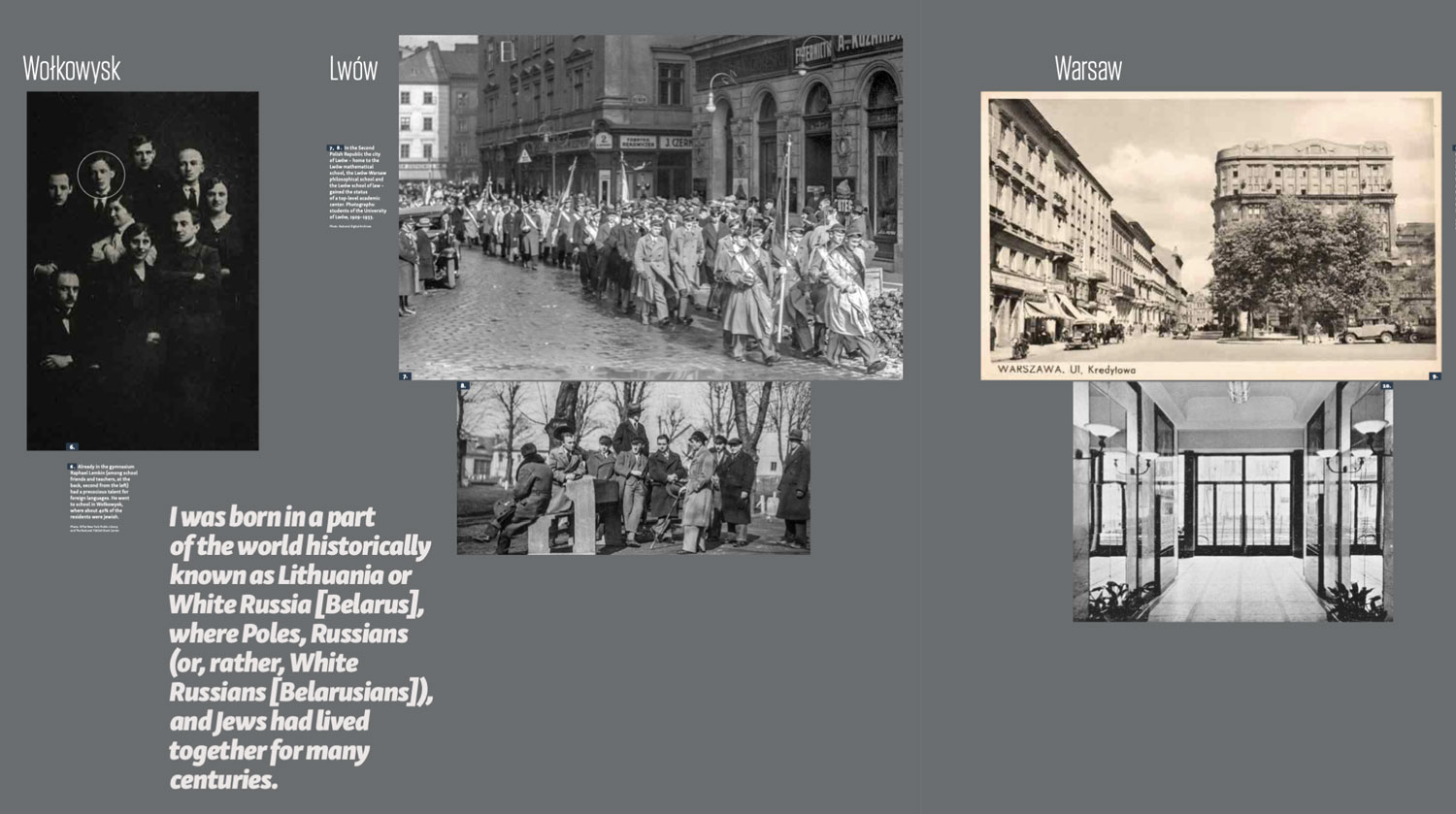
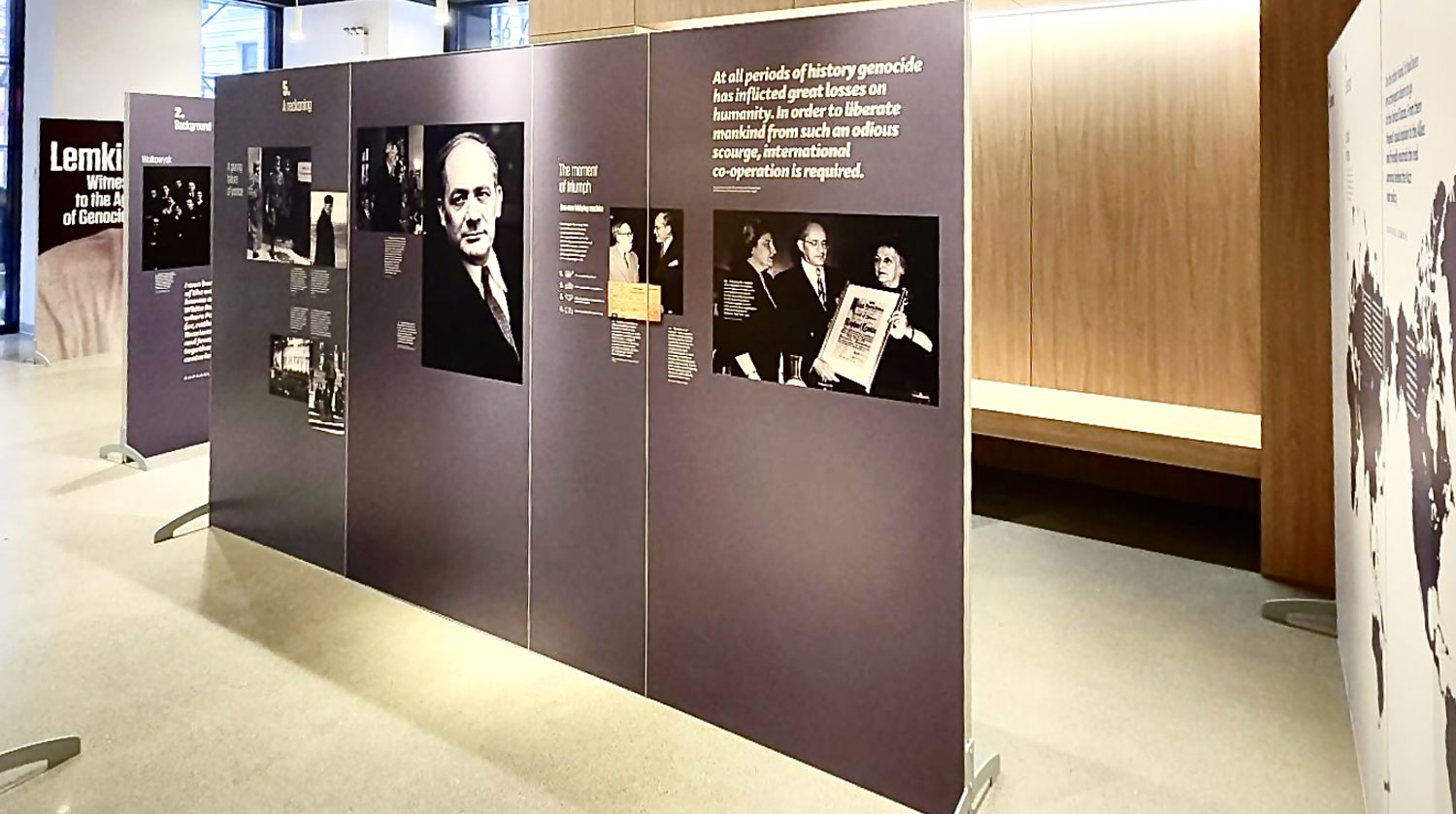
Lemkin. Witness to the Age of Genocide

On March 14–15, 2026, the Pilecki Institute opened a new chapter in New York City, officially launching its U.S. activities with a two-day public Raphael Lemkin was one of the most influential lawyers of the 20th century. Through his tireless efforts, he gave the world not only the concept of genocide, but also the Convention on the Prevention and Punishment of the Crime of Genocide, adopted by the United Nations on December 9, 1948. This was the first international human rights treaty established after the Second World War, and recognized genocide as a crime under international law.event that offered a preview of the programs and initiatives that will shape its work in the United States.

Lemkin’s thinking was deeply shaped by pre-war Poland and its vibrant intellectual life. He drew inspiration from the Lwów School of Law, the multicultural traditions of the Polish Republic, and his personal encounters with two totalitarian regimes. These experiences informed his groundbreaking conception of genocide. His work stands as one of the most important legal and philosophical responses to the great tragedies of the 20th century.
Pilecki Institute Inauguration

A Tool of Survival: The Story of the Ładoś Group
This exhibition tells the remarkable story of the Ładoś Group, a courageous coalition of Polish diplomats and Jewish activists working together in Bern during the Second World War. Led by Aleksander Ładoś, chargé d’affaires ad interim, the team included diplomats Stefan Ryniewicz, Konstanty Rokicki, and Juliusz Kühl, alongside Jewish activists Abraham Silberschein and Chaim Eiss.
Between early 1941 and late 1943, the group carried out a daring rescue operation. They illegally obtained and issued passports and citizenship certificates from Latin American countries—mainly Paraguay—which were sent to Jews living under German occupation. These documents dramatically increased their chances of survival: instead of being deported to extermination camps, many were sent to internment camps instead.
The Ładoś Group’s passport operation is one of the largest rescue efforts of the Second World War, reaching at least 8,000 Jews from Poland, the Netherlands, Austria, and Germany. Research by the Pilecki Institute has so far identified more than 3,280 passport holders.

This exhibition draws on the Pilecki Institute’s research since 2018, shedding new light on this little-known chapter of history and honoring the bravery and ingenuity of those who risked everything to save lives.

Pilecki Institute Inauguration


Proof of Courage
Currently on view at the Pilecki Institute in New York, this installation introduces visitors to the Institute’s patron, Witold Pilecki. The display serves as a preview of the upcoming permanent exhibition, Proof of Courage, opening later this year.
The exhibition tells the story of Witold Pilecki as both a witness and a hero of resistance against two totalitarian regimes—German Nazism and Soviet communism—while highlighting the universal themes of courage, solidarity, and the high price some societies pay for freedom.
The permanent exhibition will explore Pilecki’s life through seven thematic modules, each representing a key period in his extraordinary journey. At the heart of each module is a carefully recreated outfit inspired by his authentic attire: from the scout uniform of his youth during World War I and the struggle for Polish independence, to the officer’s uniform of the Polish Army, the clothing of a landowner and cooperative activist in the interwar period, the camp uniform he wore during his mission to Auschwitz, and finally, the modest suit of a political prisoner under Stalinist rule.
These visual elements are complemented by illustrations, films, period photographs, multimedia materials, and informative texts. Through modern exhibition techniques and a focus on Pilecki’s “material presence,” the exhibition offers a powerful tool for remembrance, challenging disinformation and simplified historical narratives about Poland and the region.

Pilecki Institute Inauguration